|
|
Ann's Tips &
Techniques
Are You Going to
Sniff Through
Yet
Another Summer?
DO YOU DESPAIR,
when spring and summer arrive and pollen counts rise drastically, that
you
will spend most of the time indoors keeping out of the sun and the
garden? Think
again! You could do a great deal to help yourself. Spring
in particular is a time for rebirth but not for allergy sufferers. The
beautiful spring blossoms bring
misery from sneezing, the itchy, runny nose and smarting red eyes, not
to mention a sore throat.
Your best friend at this time is a box of tissues!
Allergies are defined as "abnormal responses to normal
substances", and such malfunctions and other over-reactions of the
immune system are far more common these days than ever before. In
fact, allergies are almost epidemic.
It is said that the additional burden of chemicals that
we consume both from the air and in our diets cause the problem, but
Tokyo is the most polluted city in the world, yet the Japanese do not
generally suffer from allergies.
The high levels of pollution do cause
a burden on our immune systems, which can result in malfunctions in the
form of an exaggerated reaction to allergens. They can be
anything from dust to pollen, animal hair, deodorant sprays, perfume,
or some types of food. A healthy body should be able to cope with
pollen dust and other potential allergens. However, in
a body already overloaded with toxins, allergens can cause a problem.
In
hay fever the allergens inflame the membranes of the nose: the
membranes swell
restricting the amount of space for air to be inhaled and then the
inflammation
of the membranes increases the mucus in the nose and throat.
Antibodies are then formed by the plasma cells which
induce the mast cells (a type of white blood cells) to release
chemicals - in particular histamine. It is the excess of histamine that
causes the unpleasant symptoms.
Pollution in Food and Water
So many things in our lives today affect our immune
system; there are even chemicals and pollutants in our drinking
water. If you have a water filter in your kitchen you can reduce
these considerably.
We unknowingly ingest antibiotics in our food. The meat
industry uses antibiotics in the feed of cattle to help prevent
infections of one kind
or another.
Our diet could be inadequate because of insufficient
minerals, vitamins and enzymes which are important as well.
Aluminum in cooking utensils and some food packaging,
drugs, alcohol and smoking -- all have a negative effect on our body,
particularly our immune system.
How to Improve the Immune System
Vitamin C is a great detoxifier, increases your
resistance and is very good against stress. You need to take 1 gram of
pure vitamin C
per day for it to be effective in aiding the miseries of hay
fever.
Give your body a spring cleaning to encourage
detoxification. A couple of days on spring water and grapes, if you are
strong minded enough, is a good start. Buy grapes that have seeds
and chew those up as well, because they stimulate the bowel and
encourage detoxification. You can eat three or four pounds of grapes a
day if you wish to. The good thing about a grape fast is that the
natural sugar in the fruit keeps your blood sugar levels intact and
helps prevent the severe lassitude that can be experienced.
Chlorella supplements twice a day are also good.
Not only is chlorella a good detoxifier, but it is also 60% protein and
contains a broad range of nutrients including the all-essential amino
acids and is also high in vitamin A. It also contains Quercetin,
which is a bioflavonoid recently found to have natural antihistamine
qualities. Chlorella is available in most health food stores.
If you are very "stuffed up", try an inhalation of
camphor and eucalyptus oil. A few drops in boiling water works
wonders, or you
can now buy a very reasonably priced facial inhaler, available in most
large
pharmacies.
So don't despair if you are a hay fever sufferer, there
are certainly things you can do to help yourself. One last piece
of advice: refrain from eating sugar in any form during the hay fever
season. Allergy thrives on sugar, so turn your back as the ice cream
truck comes into view. You can have strawberries, but forget the
sugar. It really is worth it, taking good care of yourself.
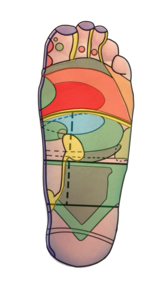
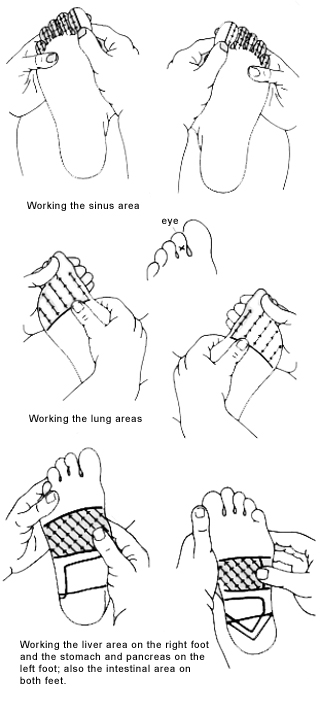
A Reflexology Treatment Plan for Hay Fever, etc.
You can do more to relieve unpleasant allergy symptoms
with regular treatments of reflexology, which are beneficial in helping
all manner of allergic conditions.
We need to go back to basics and begin treating the whole
person. Reflexology treatments will help to detoxify the body and
improve
immunity. Encourage your patient to commence treatment approximately
six
weeks before the "worst time".
Give your treatment once a week, and then during the
attack as well. You will usually find that the hay fever is far less
severe if the treatments are started before the hay fever starts.
|
|